What kind of breast implants do you use?
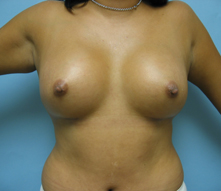
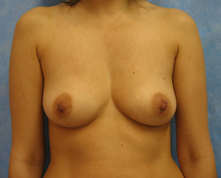
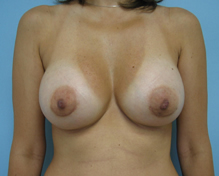
Dr. Grigoryants uses silicone and saline implants for breast augmentation. Both types of implants are FDA approved and considered to be safe. Saline implants are filled with salt water and silicone implants contain silicone gel. The new generation silicone breast implants provide superior softness to the breast. Recent evidence shows that the new generation silicone implants (known as cohesive gel or memory gel implants) are less likely to leak than the saline breast implants.
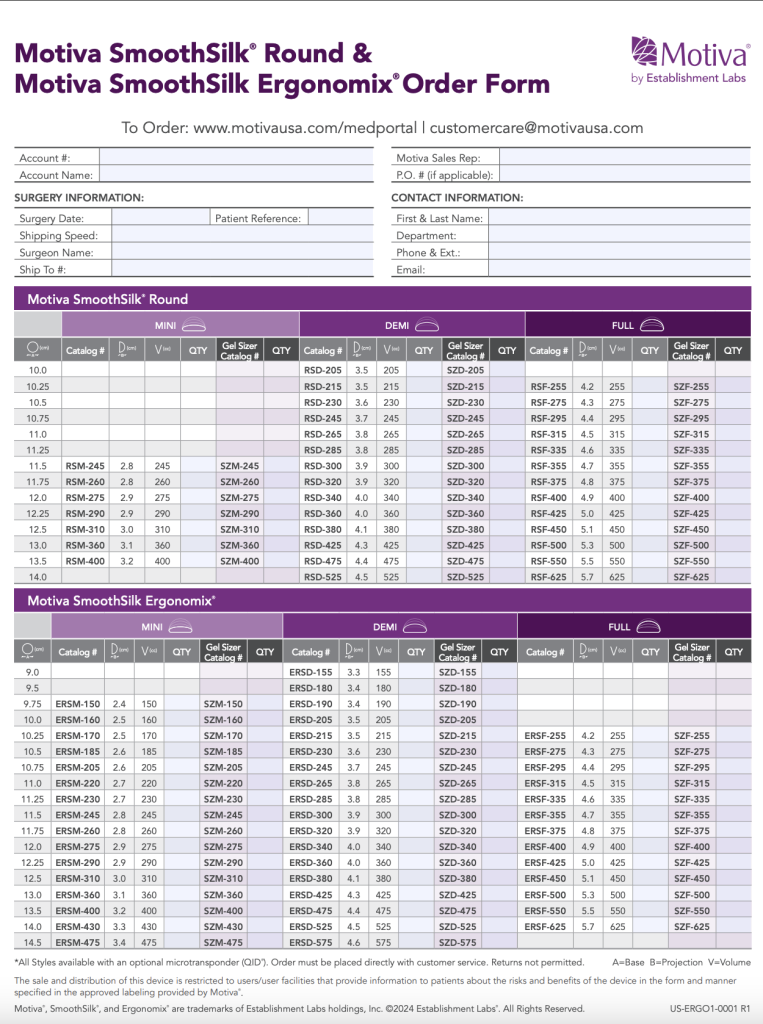
Dr. Grigoryants offers Motiva Implants ® which have a unique surface designed for enhanced biocompatibility to improve the body’s response to your implants.⁴ Compared to other implants*, Motiva implants were scientifically shown to have the least amount of inflammation⁴ and low bacterial attachment,⁵,⁶ helping the tissue around the implant to stay soft.⁴
Key Advantages of Motiva® Implants:
Lower risk of capsular contracture – With significantly less inflammation and fibrosis, the reported rate of capsular contracture is under 1%.
No reported cases of BIA-ALCL – Unlike some other implants, Motiva® implants have not been associated with breast implant–associated anaplastic large cell lymphoma (BIA-ALCL).
Placement above the muscle – Thanks to the low rate of capsular contracture, these implants can be placed over the muscle (either beneath the muscle fascia or under the breast tissue). This approach allows for:
-A narrower, more defined cleavage
-Less pain after surgery
– Lower risk of bleeding
– No animation deformity (visible implant movement with chest muscle contraction)
-Less dissection of the pocket laterally, preserving soft tissue and innervation to the nipple.
Traditionally, other brands of implants have been placed under the pectoralis muscle using a “dual plane” technique, which requires cutting the muscle. That method often leads to more postoperative pain, a higher chance of bleeding, and in some patients, visible implant movement when the muscle contracts. With Motiva® implants, these drawbacks can often be avoided.